The Need for College & Career Planning
Among the most important lessons learned is that there is a huge unmet need for a CAIC college and career planning curriculum that:
- Inspires students to discover their personal interests, career identity, and purpose;
- Communicates to parents in a culturally and linguistically relevant way how to prepare their children to graduate from high school college- and career-ready and create a family college-going culture that nurtures a child’s career identity; and,
- Embraces a Family-Centered approach that links student learning to families and communities to ensure student success.
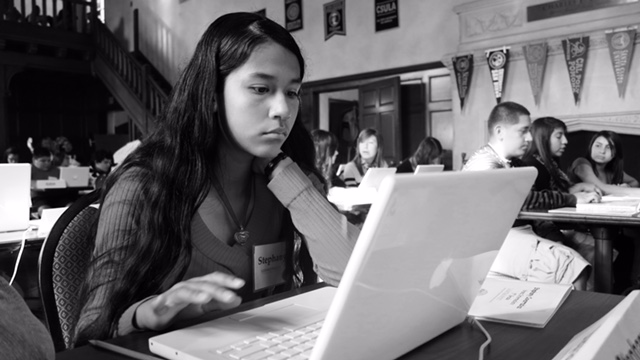
More efforts need to be directed to assist youth to discover their personal interests and talents. Everyone has personal interests and a dream, but not everyone gets to discover them, particularly in underserved low-income communities where youth have limited opportunities to explore their interests and talents and limited access to social and professional networks that help students prepare for colleges and careers that are aligned to their interests and talents. CAIC lessons and activities provide all students the opportunities to discover their passions and develop important social, professional, leadership, and networking skills.
Educators often ask if middle school students are mature enough to engage in self-inquiry and a process designed to help them discover their personal interests and passions. After pilot testing CAIC student lessons with thousands of low-income middle schools students who consistently report that the lessons have changed their life and recommend that the lessons be offered to their peers, the ICC is convinced that the lessons are age appropriate. Perhaps the biggest testament to the value of these lessons comes from the 96 percent of the 3,500 El Monte middle school students who completed lessons and recommended that they be offered to their peers the following year.
There are many examples of the ways in which the CAIC College and Career Planning curriculum has positively impacted individual students. One El Monte Superintendent said, “The lessons are life changing and save lives.”
Similarly, a Latino eighth grader at Madrid Middle School in El Monte stated that he didn’t need the lessons because he knew exactly the career that he wanted to pursue when he got older. He proudly said, “I’m going to work with my dad in construction and make a lot of money ($15 per/hour).” I responded, “That’s fantastic that you know what you want to do when you get older, but this lesson is not optional. You are required to complete the online activities and worksheet during this class period.” When the class ended, the boy said, “Miss, you changed my life. I never knew I could become a General Contractor or Civil Engineer and make $80,000-100,000 a year if I go to college. I’m going to college to earn a Bachelor’s and Master’s degree so that I’ll really be able to help my family.”
Educators and community stakeholders also question if high school seniors can benefit from CAIC Collegeand Career Planning curriculum. Without a doubt, high school seniors benefited. First generation high school seniors use the CAIC instructional materials and free online counseling tools to help them choose the college that they will attend and/or a program of study that matches their personal interests. For many students, choosing the right college is a difficult task, particularly for low-income and first-generation students who do not have a clear sense of their personal interests, career options, and/or the education and training that they need to pursue a career of their dreams. Last year, an El Rancho senior screamed in class after she matched the results of her “Interest Profiler” assessment to career options that aligned with her personal interests. She exclaimed to the class, “I never knew I could be an Epidemiologist! I’ve never heard of that career and know that’s exactly what I want to do because it combines two subjects I love – biology and math.” Today, this student is a freshman at Humboldt State University studying to become an Epidemiologist. Her dream career is to research diseases that affect the human body, like HIV, to find ways to cure or prevent
the outbreak of diseases.
Parents need and want college and career planning lessons that communicate to them in relevant ways so that they can support their children in preparing to graduate from high school college- and career-ready. Today, there are 3.3 million Latino students in California’s K-12 public schools. Many of these students will be the first members of their families to graduate from high school and attend college. Many of these students have Spanish-speaking parents and/or caregivers that have limited knowledge about preparing their children to graduate from high school college- and career-ready. Moreover, research shows that Latino students are often concentrated in schools that do not guide them or their families to graduate from high school and prepare for college. Research finds that Latino families value higher education for their children. Unfortunately, many Latino families lack the “academic” and “College Knowledge” needed to navigate the college planning process. Moreover, they lack the social and professional networks to help them circumvent land mines, overcome institutional barriers, and bridge huge opportunity gaps.
Many of these students will be the first members of their families to graduate from high school and attend college.
There are 3.3 million Latino students in California’s K-12 public schools. Many of these students will be the first members of their families to graduate from high school and attend college.